



Farmers keep asking one question. Is a PVC Irrigation Water Bladder ideal for farm irrigation, or just a nice idea? The honest answer depends on your field layout, water source, season length, and how rough the ground gets. We will break it down in plain language, then you can decide fast.
Quick Answer: When a PVC Irrigation Water Bladder Makes Sense
Yes, a PVC Irrigation Water Bladder can be ideal for farm irrigation. It works best when you need flexible water storage. It also shines on seasonal fields and remote blocks. We set it down, fill it, then irrigate.
Still, it is not perfect for every farm. We should match it to the job. Then it performs well. If we force it into the wrong role, problems show up fast.
Best for: temporary storage, mobile water supply, backup buffer, drip feeding support.
Not ideal for: high-pressure storage, sharp rocky ground, high vandal risk, extreme UV exposure without protection.
| Farm situation | PVC Irrigation Water Bladder fit | Why it helps |
|---|---|---|
| Seasonal irrigation on rented land | Great | Set up fast, then fold away after harvest |
| Remote field far from the main pump | Great | Acts like a buffer tank close to the lines |
| Permanent, high-pressure supply system | Weak | It stores water, not pressure |
| Rocky ground and stubble everywhere | Maybe | Needs a groundsheet and careful site prep |
| Hot sun, no shade, long season | Maybe | Needs UV-rated material, smart placement |
Think of it like a flexible “water warehouse.” It holds water. It helps you deliver it smarter. It does not replace pipes or pumps.
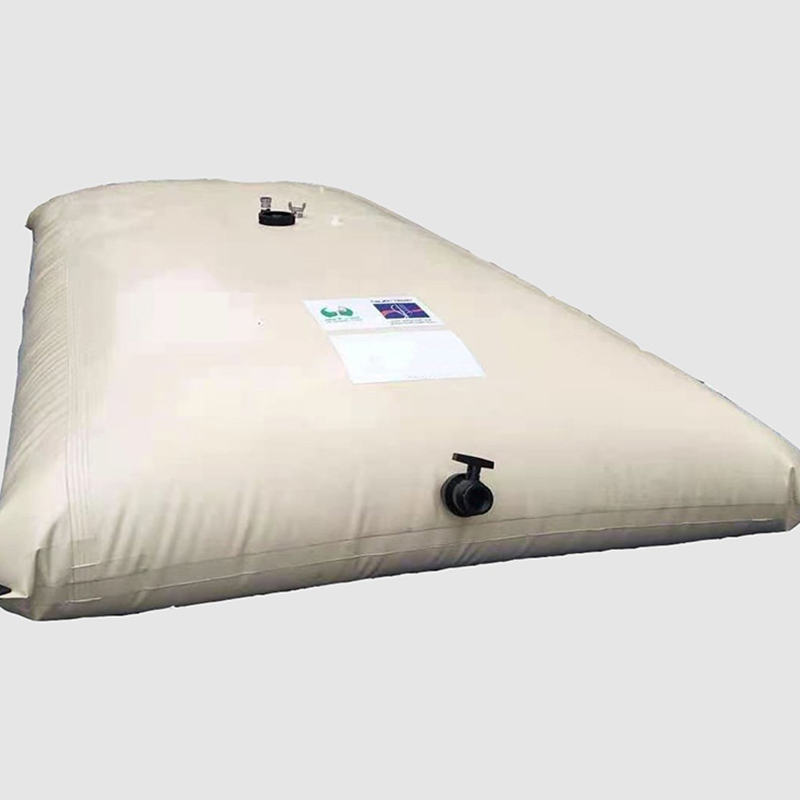
What Is a PVC Irrigation Water Bladder?
A PVC Irrigation Water Bladder is a collapsible water storage tank. Many people call it a pillow tank. It lays flat when empty. It expands as you fill it.
It is usually made from PVC-coated fabric. It includes welded seams. It also includes inlet and outlet ports for hoses and valves.
Common names: PVC water bladder tank, PVC pillow tank, collapsible water tank.
What it does: stores irrigation water, supports transport, buffers pump demand.
What it is not: a pressurized vessel or a pipe network.
| Feature | What it means | Why farms care |
|---|---|---|
| PVC-coated fabric | Flexible skin plus reinforcement | Folds for storage, yet stays strong |
| Welded seams | Bonded joints along panels | Lower leak risk under real field use |
| Inlet / outlet ports | Connectors for hoses and valves | Controls filling and discharge smoothly |
| Collapsible body | Flat when empty | Easy transport, small off-season footprint |
How Farm Irrigation Systems Use a PVC Irrigation Water Bladder
On farms, water demand changes all day. Pumps cycle. Lines open and close. Pressure fluctuates. A PVC Irrigation Water Bladder helps smooth those swings, so the system feels calmer.
Field-side buffer storage near irrigation zones
We place the bladder near the block. Then we refill it from a distant source. It reduces long pumping runs. It also cuts downtime during peak demand.
Drip irrigation support for steadier supply
Drip systems prefer steady flow. The bladder holds reserve water. We feed the pump from it. Short interruptions stop hurting the crop schedule.
Emergency reserve for drought days and outages
Sometimes the well drops. Sometimes power goes out. Canal schedules shift too. It happens. A bladder gives a backup cushion for critical irrigation windows.
Mobile storage for water hauling
If you truck water to remote blocks, a bladder can ride on a trailer. You unload it on site. Then you pump out as needed. It reduces repeated trips and wasted time.
Short-term mixing or staging, only when compatible
Some farms stage nutrients or conditioning agents. You can use a bladder for mixing in some cases. We always confirm chemical compatibility first. It avoids coating damage and surprise leaks.
| Use case | What it solves | Good for |
|---|---|---|
| Field-side buffer | Distance and refill timing | Remote irrigation blocks |
| Drip support | Supply consistency | Drip lines needing steady flow |
| Emergency reserve | Outages and shortage days | High-value crops |
| Water hauling | Fewer trips, better staging | Temporary irrigation sites |
| Mixing / staging | Short-term handling | Only when chemistry fits |
Why Farmers Consider a PVC Irrigation Water Bladder Instead of Rigid Tanks
Rigid tanks work. They also bring friction. They take space all year. They are awkward to move. A PVC Irrigation Water Bladder avoids many of those issues, especially when farms change layouts often.
Portability helps on changing farms
We move irrigation gear often. Rotations change. Leases change. Water points change too. A bladder follows the farm. It folds, travels, then deploys quickly.
Off-season storage gets easier
Empty rigid tanks still take space. A bladder collapses. We store it in a small shed corner. It frees yard space for equipment.
Fast deployment saves labor during peak heat
We set it on a prepared surface. We connect hoses. We fill it. It is ready. That speed matters during drought response or emergency repairs.
Less site work than building pads for rigid tanks.
Less hauling hassle in many seasonal setups.
Easy scaling up for temporary capacity boosts.
Pros and Benefits of PVC Irrigation Water Bladder for Farm Irrigation
These benefits explain why farms keep choosing it. They want flexibility. They want speed. They want fewer headaches during the season.
Flexible capacity: pick sizes based on crop blocks and demand.
Space-saving storage: folds down when empty, stores easily.
Fast setup: place, connect, fill, then irrigate.
Field-side staging: reduces long pumping runs and time.
Lower transport hassle: easier than moving big rigid tanks.
Upgrade-friendly: add better valves, hoses, filters later.
| Benefit | Why it matters on farms | Practical tip |
|---|---|---|
| Portable storage | Farm layouts change often | Keep a dedicated groundsheet ready |
| Quick deployment | Time matters during heat waves | Pre-stage hoses and clamps |
| Buffer capacity | Reduces irrigation interruptions | Size it for peak-hour demand |
| Compact off-season storage | Saves yard and shed space | Store dry, keep rodents away |
| Scalable system | Add capacity as acreage grows | Standardize fittings across fields |
Cons, Limitations, and Risks of a PVC Irrigation Water Bladder
A PVC Irrigation Water Bladder is practical. It also has weak spots. If we know them early, we avoid most trouble. If we ignore them, they show up during the hottest week.
Puncture and abrasion risk
Sharp rocks, stubble, metal scraps, broken pallets. They are the usual enemies. Even small debris can create a slow leak. We prevent it using basic pad prep and a protective groundsheet.
Clear the pad area. Remove stones, roots, stalks.
Use an underlayment or heavy tarp as a ground barrier.
Keep tractor traffic away from the bladder zone.
UV aging and heat stress
Sunlight can shorten material life. Heat can speed aging too. A UV-rated skin helps. Shade helps even more. We also place it away from reflective surfaces.
Water quality issues: algae, sediment, odor
Warm water plus sunlight invites algae. Sediment settles. It can clog filters later. So we plan filtration and periodic flushing. It stays simple, yet it works.
Leaks around fittings
Many failures start at ports, valves, clamps, adapters. Not the fabric. We tighten correctly. We support hoses, so they do not pull on the port. We check seals weekly during peak irrigation.
Not a pressure tank
This matters. A PVC Irrigation Water Bladder stores water. It does not store high pressure. If we need pressure, we use pumps, regulators, and proper piping.
| Risk | What causes it | What we do |
|---|---|---|
| Puncture | Rocky ground, stubble, debris | Pad prep, groundsheet, traffic control |
| UV aging | Long sun exposure | UV-rated bladder, shade strategy |
| Algae growth | Warm, sunny water | Shade, cleaning routine, circulation |
| Port leaks | Loose clamps, hose strain | Correct fittings, strain relief, inspections |
| Wrong expectations | Using it as pressure storage | Use pumps and piping for pressure |
PVC Material Deep Dive: What “PVC” Means for Bladders
People know PVC from pipes. Bladders use PVC in a different way. They use PVC as a coating over fabric reinforcement. This combo brings strength and flexibility.
PVC-coated fabric basics
Think of it like a sandwich. The core is woven fabric. The outside is a PVC coating. The fabric carries tensile load. The coating provides water tightness and surface protection.
Reinforcement fabric: often polyester, woven for strength.
PVC coating: seals water, adds abrasion resistance.
Surface finish: can add UV resistance or anti-mildew treatment.
Thickness, material weight, reinforcement weave
Suppliers describe material using gsm or oz/yd². Heavier material often improves puncture resistance. It also increases handling weight. We match it to the site, not to marketing.
| Material factor | What it affects | What to ask |
|---|---|---|
| Coating quality | Water tightness, UV performance | Outdoor use rating, recommended season length |
| Fabric reinforcement | Tear strength, stability | Base fabric type, weave density |
| Material weight | Puncture resistance, handling | gsm/oz spec, intended use |
| Seam construction | Leak risk, long-term durability | Weld method, corner reinforcement |
Seam technology: where quality shows up
Seams are everything. Good bladders use heat welding or RF welding. It bonds material into a single joint line. Stitching alone is not enough for long-term storage.
Ask if seams use RF welding or hot welding.
Ask if corners use reinforcement patches.
Ask how leak testing is handled before shipping.
Accessories that matter
Small accessories protect the whole system. We treat them as essential.
Groundsheet or protective mat
Repair patches and adhesive kit
Spare gaskets for ports
Hose strain relief straps
PVC Irrigation Water Bladder vs Other Water Storage Options
Farmers compare storage options all the time. They ask, “Is a bladder better than a rigid tank?” It depends on mobility, space, season length, and pad quality.
| Option | Best for | Pros | Cons |
|---|---|---|---|
| PVC Irrigation Water Bladder | Seasonal, mobile storage | Portable, fast setup, compact storage | Puncture risk, needs pad prep |
| TPU / urethane bladder | Rougher use, higher durability needs | Often tougher, strong flexibility | Usually higher cost |
| Rigid PE tank | Permanent storage points | Stable, low puncture risk | Hard to move, bulky storage |
| Lined pond | Large volume, fixed location | Big capacity | Evaporation, contamination, permits |
| Steel tank | Fixed installs, industrial sites | Rigid and durable | Cost, transport, corrosion management |
How to Size a PVC Irrigation Water Bladder for Your Farm
Sizing is easier than it looks. We calculate daily demand. Then we add buffer. Then we check refill rate. The goal is stable irrigation, not oversized storage.
Step-by-step sizing method
Estimate daily irrigation volume per block.
Confirm refill rate from well, canal, or truck.
Add buffer for peak hours and emergencies.
Pick a size allowing safe refill cycles.
Simple sizing formula
Bladder capacity ≈ (Daily irrigation need × hours you want covered) + emergency buffer
| Farm style | Typical goal | Practical sizing idea |
|---|---|---|
| Small block drip | Short buffer, stable flow | 8–24 hours of irrigation volume |
| Mixed crops | Flexible staging | 1–2 days buffer for peak demand |
| Remote acreage | Fewer refill trips | 2–5 days buffer, depends on hauling |
Capacity planning checklist
How many hours per day do we irrigate?
How often can we refill the bladder?
Do we need emergency margin for outages?
Do we split storage across multiple blocks?
Flow, Pressure, and Irrigation Compatibility
Many buyers assume the bladder creates pressure. It does not. Pressure comes from gravity head or a pump. The bladder is the storage point, then the system does the pushing.
Gravity feed vs pump feed
Gravity feed: simple and quiet, limited pressure, best for gentle slopes and short runs.
Pump feed: higher control, supports sprinklers and long lines, easier scheduling.
Outlet size, hoses, fittings
Port size affects flow. Valve style matters too. We also match fittings to what the farm already uses, so repairs stay easy.
| System part | What to match | Why it matters |
|---|---|---|
| Outlet port | Hose diameter and flow target | Prevents bottlenecks |
| Valve style | Ball valve, butterfly, gate | Controls flow, reduces leak risk |
| Filters | Mesh, disc, sand as needed | Protects drip emitters and valves |
Filtration basics
If water carries sediment, filters protect everything downstream. For drip irrigation, filtration is not optional. It is the life of the system.
Site Prep and Installation Checklist for a PVC Irrigation Water Bladder
Most failures trace back to placement. A good site gives years of service. A bad site gives leaks and frustration, even if the bladder is high quality.
Ground selection
Pick flat ground, low traffic area.
Remove sharp stones, stubble, tools, scrap.
Level minor slopes. It helps it sit evenly.
Use a protective underlayment
A groundsheet protects the bladder. It also makes cleanup easier. We treat it as standard equipment.
Placement rules farms like
Keep it near pump and filtration station.
Keep it away from tractor turns and implements.
Keep it away from sharp posts and fence wire.
Filling and venting
Fill slowly at first. Let it spread evenly. Avoid trapped air pockets. Stop before overfill. Leave room for expansion during heat.
Leak test before full use
We do a short leak check. It saves hours later.
Fill to 15–25% volume.
Inspect seams and ports.
Tighten clamps, add strain relief.
Fill to operating level.
Recheck after one hour.
Maintenance, Cleaning, and Seasonal Storage
Maintenance stays simple. It is mostly inspection and housekeeping. We keep ports clean. We keep the pad clean. It stays reliable all season.
Routine inspection points
Seams and corner areas
Port gaskets and valve connections
Surface abrasion marks
Groundsheet condition
Cleaning and flushing
Flush sediment periodically. Clean using mild solutions if needed. Rinse well. Let it dry before storage.
Off-season storage
Drain fully, then dry it.
Fold gently, avoid sharp creases.
Store away from rodents and sharp tools.
Keep it out of direct sun during storage.
Water Quality and Chemical Compatibility
Most irrigation water is not clean. It is normal. Sediment, algae, minerals. They affect filters and valves more than the bladder skin. We manage them using filtration and cleaning cycles.
Fertilizers and additives
You can use a bladder for fertigation staging in some cases. It depends on the chemical. We confirm compatibility before we do it. It avoids coating damage and early leaks.
Temperature and sunlight
Hot climates speed algae growth. They also stress materials. Shade helps. Good site selection helps too. Periodic flushing keeps it under control.
Durability and Lifespan: What Really Affects It
Lifespan is not one number. It depends on UV exposure, ground friction, cycling frequency, handling habits. We can control many of these. So we focus on what we can improve, then performance follows.
UV exposure time each season
Abrasion from poor pad prep
Dragging during transport, not lifting
Overfilling and stress at seams
| Factor | What it does | How we improve it |
|---|---|---|
| Sun exposure | Speeds aging | Shade, UV-rated material, smart placement |
| Rough ground | Creates abrasion | Pad prep, thicker groundsheet |
| Transport handling | Creates wear at folds | Lift, do not drag, fold gently |
| Fittings stress | Leaks at ports | Strain relief, correct adapters |
Safety and Compliance Considerations
Most farms treat water storage as low risk. We still plan basic safety. Hoses can whip. Pumps can surge. Spills can create muddy hazards. Simple rules keep everyone safe.
Keep hoses secured. Reduce trip hazards.
Use safe pump wiring and weather-rated connections.
Consider secondary containment if local rules require it.
Protect it from livestock and wildlife contact.
Cost and ROI: Is a PVC Irrigation Water Bladder Cost-Effective?
For many farms, it is cost-effective because it reduces downtime and labor. It lets you stage water near the irrigation block. It also simplifies seasonal builds, especially on changing land use.
Cost components
Bladder body and ports
Valves, hoses, adapters
Groundsheet and pad prep
Labor and pumping energy
ROI logic farms like
Fewer irrigation interruptions
Less emergency hauling chaos
More stable drip system performance
Faster setup on seasonal land
| Scenario | What improves | Why it matters |
|---|---|---|
| Remote field buffer | Less pump runtime spikes | More predictable irrigation windows |
| Drought backup | Less crop stress | Protects yield during shortages |
| Seasonal lease | Lower setup effort | Saves labor each season |
Decision Guide: Is a PVC Irrigation Water Bladder Ideal for Your Farm?
We can decide quickly using a simple matrix. Answer honestly. It tells you if it fits, or if you should use another storage option.
| Your condition | Result | Reason |
|---|---|---|
| You need mobile water storage | Yes | Portability is the main advantage |
| You have clean, flat placement areas | Yes | Puncture risk stays low |
| You need pressurized storage | No | It stores water, not pressure |
| You expect rough ground all season | Maybe | Pad prep and groundsheet become critical |
| You can provide shade or UV protection | Yes | Material lifespan improves |
Buying Checklist: What to Ask Before You Purchase
Buying gets easier when we ask the right questions. We focus on material, seams, fittings, and accessories. Those parts decide long-term success.
Is the PVC material UV-rated for outdoor farm use?
Which reinforcement fabric is used?
How are seams welded, RF or heat weld?
Which inlet and outlet sizes are available?
Which valve options come standard?
Do we get a repair kit and spare gaskets?
Is a groundsheet included or recommended?
If you want to compare models and materials across product categories, browse tarpaulin products and water storage solutions. It helps you standardize fittings and accessories across farms.
Common Confusion: PVC Pipes vs PVC Irrigation Water Bladder
PVC pipes move water. A PVC Irrigation Water Bladder stores water. They work together. They do not replace each other.
PVC pipes: mainlines, laterals, sprinkler supply, durable routing.
PVC irrigation water bladder: buffer storage, mobile staging, emergency reserve.
FAQs About PVC Irrigation Water Bladder
Is a PVC Irrigation Water Bladder safe for irrigation water storage?
Yes, for irrigation storage, it is commonly used. Keep it clean. Keep it shaded when possible. Use filtration to protect emitters and valves.
Can a PVC Irrigation Water Bladder handle sunlight all season?
It can, if it uses UV-rated material and smart placement. Shade helps a lot. Long direct sun exposure shortens lifespan for any polymer system.
How do we prevent punctures in a PVC Irrigation Water Bladder?
We prepare a flat pad, remove debris, then use a heavy groundsheet. We also keep traffic away from it. It works.
What size PVC Irrigation Water Bladder do we need for drip irrigation?
Many farms size it to cover peak hours plus a buffer. Start from daily irrigation volume. Then match refill rate. Choose a size that prevents system interruptions.
Can we use a PVC Irrigation Water Bladder for fertigation mixing?
Sometimes. It depends on the chemical. We confirm compatibility before we do it. If you want a larger staging option, check a portable PVC pillow bladder water tank model, then confirm port sizes and materials.
How do we clean and store a PVC Irrigation Water Bladder in winter?
Drain it fully, rinse it, let it dry. Fold it gently. Store it away from rodents and sharp tools. Keep it out of direct sunlight.
What fittings work best on a PVC Irrigation Water Bladder?
Pick fittings matching your hoses and pumps. Use good gaskets. Add strain relief, so hoses do not pull on the port. It prevents most leaks.
Conclusion and Next Steps
A PVC Irrigation Water Bladder is often ideal for farm irrigation when you need flexible storage. It fits seasonal fields, remote blocks, and drought backup plans. It also supports steadier drip irrigation by acting as a buffer.
Choose it wisely, then it rewards you. Prepare the site. Protect it from punctures and UV. Match fittings to your system. Keep a simple maintenance routine.
If you want to compare capacity and portability, start from a collapsible water storage bladder option, then narrow down inlet and outlet sizes for your irrigation layout.


