
English 
No. 39 Tangning Road, Yunhe Street, Linping District, Hangzhou City, Zhejiang Province
Views: 0 Author: Site Editor Publish Time: 2026-02-27 Origin: Site


When customers ask us, “Is a PVC water tank suitable for outdoor use?” they usually have a real scenario in mind: temporary water storage at a construction site, emergency water supply for remote areas, irrigation support for farms, rainwater collection, or on-demand storage for events and field operations. Outdoor use is demanding because the tank isn’t protected by a controlled indoor environment. It faces direct sunlight, daily temperature swings, wind, rough ground, and unpredictable handling. That’s why the real question isn’t only “Can it be outdoors?”—it’s what conditions it can handle, how long it can perform reliably, and what setup details prevent failure.
From our manufacturing and supply perspective, a PVC water tank can be suitable for outdoor use—when it’s made with outdoor-grade PVC material, proper reinforcement structure, and correct installation practices. In this guide, we’ll explain what makes a PVC water tank outdoor-ready, what risks to manage (UV, abrasion, puncture, freezing), how to set it up safely, and how to choose the right tank for your project.
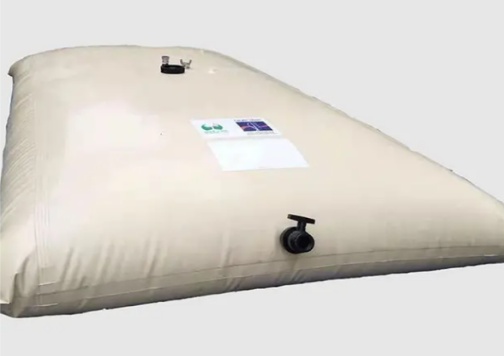
A PVC water tank (often called a flexible water tank or PVC tarpaulin tank) is a collapsible storage container made from PVC-coated fabric. Compared with rigid tanks, it is designed for:
fast transport (foldable)
quick deployment
temporary or semi-temporary storage
flexible capacity choices
Many outdoor projects prefer PVC tanks because they reduce shipping volume and can be installed where rigid tanks are difficult to deliver.
A PVC water tank can be suitable for outdoor use if it includes:
UV-resistant PVC formulation or UV-protective coating
High-strength base fabric (reinforcement) to resist tearing
Reliable seams and welding for water pressure stability
Appropriate fittings and valves for outdoor piping connections
Correct ground preparation to prevent abrasion and puncture
If the tank is made for indoor or light-duty use only, leaving it outdoors may shorten service life significantly.
UV is the biggest outdoor aging factor for PVC materials. Long-term sunlight can cause:
surface hardening
color fading
reduced flexibility
faster wear at fold lines
What to look for: UV resistance is not just a sales word—outdoor tanks should use PVC tarpaulin designed for exposure.
Outdoor temperatures expand and contract materials. Daily cycling can stress seams and fittings, especially if the tank is overfilled.
Best practice: allow small expansion margin and avoid extreme over-pressurization.
Most outdoor failures come from what’s under the tank, not the tank itself. Rocks, sharp roots, gravel, and rough concrete edges can abrade the base.
Best practice: use a groundsheet or protective mat and clear the area carefully.
Outdoor tanks can shift slightly if not positioned properly, especially when partially filled. Hose connections can also pull on fittings.
Best practice: provide hose slack and avoid lateral force on valves.
If water freezes, it expands. This can stress seams and fittings.
Best practice: avoid full storage in freezing conditions, or drain when temperatures drop below freezing.
Feature | Why It Matters Outdoors | What to Ask in Purchasing |
UV resistance | Reduces sunlight aging | Is the PVC tarpaulin UV-stabilized? |
Fabric reinforcement | Improves tear resistance | What base fabric type/strength is used? |
Seam method | Determines leak resistance | Heat welded or high-strength bonding? |
Bottom protection | Prevents abrasion | Is there a thicker base or wear layer? |
Fittings quality | Prevents leakage at connections | What material are valves/flanges? |
Repairability | Extends field use | Is a repair kit available and easy to use? |
Pick a flat area with:
stable soil or a firm platform
no sharp stones or debris
safe distance from vehicle traffic
Remove stones, branches, and anything sharp
Lay down a protective groundsheet (tarpaulin, mat, or geotextile)
Ensure edges are smooth (avoid rubbing points)
Spread the tank fully to avoid twisted folds
Align inlet/outlet fittings for easy hose routing
Keep the tank away from sharp corners, metal edges, or hot surfaces
Use compatible hose sizes and connectors
Avoid over-tightening threads
Support hoses to prevent pulling on the tank fittings
Fill slowly at first
Check seams, corners, and fittings for leaks
Confirm the tank settles evenly without one side lifting
Issue | Likely Cause | Prevention |
Base abrasion | Rough ground or debris | Protective mat + ground preparation |
Fitting leakage | Poor hose support or over-tightening | Support hoses + correct installation |
Premature aging | Continuous UV exposure | UV-grade material + shade where possible |
Seam stress | Overfilling or uneven base | Level base + don’t exceed capacity |
Puncture | Sharp objects under tank | Clean site + use thick groundsheet |
A PVC water tank is often a strong outdoor solution when your project needs reliable storage without permanent construction. Because the tank is foldable and lightweight compared with rigid tanks, it fits situations where speed and logistics matter as much as capacity. For example, PVC tanks work well for temporary or emergency water storage when you need to deploy quickly after weather events, site changes, or short-term supply interruptions. They are also widely used for seasonal irrigation support, where water demand rises during specific months and a flexible tank can be set up, used, and stored again without taking up permanent space.
Another common fit is remote-site water supply. When a site is difficult to access—farmland, hillside locations, temporary work areas, or projects with limited roads—moving a rigid tank can be expensive and complicated. A PVC tank can be shipped compactly, carried to the installation point, and set up with minimal equipment. Many users also choose PVC tanks when they want easy transport and fast installation, especially if the site layout may change. Finally, if you need flexible capacity without heavy infrastructure, PVC tanks make it easy to scale up or down by selecting different volumes rather than building new storage.
Overall, PVC tanks are especially practical for projects that value mobility, quick setup, compact shipping, and simple storage when not in use.
Outdoor conditions vary, and some sites require extra protection or a different storage approach. If your installation area has constant heavy abrasion risk—such as rocky terrain, sharp gravel, or rough concrete edges—your priority should be base protection. Even a strong PVC material can suffer if the bottom is repeatedly rubbed by sharp surfaces. In this case, adding a thicker groundsheet, sand layer, protective mat, or a prepared platform can greatly reduce risk.
If extreme sunlight exposure is continuous and there is no shade, UV aging becomes the main concern. UV-resistant material helps, but for long-duration exposure, using a simple shelter, shade cover, or placing the tank where it avoids peak sun can improve durability. If temperatures frequently drop below freezing, consider draining during cold periods or switching to solutions designed for freeze conditions, because ice expansion can stress seams and fittings. Finally, if the tank will remain installed for a very long time without maintenance access, you should plan for periodic inspection or choose a setup that allows easier monitoring. In these scenarios, extra protection and routine checks significantly improve reliability and service life.
So, is a PVC water tank suitable for outdoor use? Yes—when it’s built with outdoor-grade PVC tarpaulin, UV resistance, strong reinforcement, reliable seams, and when it’s installed on a properly prepared surface. Outdoor performance isn’t only about material; it’s also about setup discipline. A clean, flat base, protected bottom, and correctly supported hose connections often make the difference between a tank that works smoothly for the full season and one that fails early. If you’re evaluating PVC water tank options for outdoor storage, irrigation, emergency supply, or remote projects, we’re ready to share practical recommendations based on real usage scenarios. To learn more about PVC water tank solutions, specifications, and customization options, please explore Hangzhou Kotin Tarpaulins Co., Ltd. and contact our team for product information and support.
It can be, as long as the PVC material is UV-resistant and the tank is designed for outdoor exposure. Shade and good setup can further extend service life.
Use a protective groundsheet or mat and remove sharp debris. Most outdoor issues come from abrasion and punctures caused by rough ground.
Yes. PVC water tanks are commonly used for seasonal irrigation storage because they are easy to transport, fast to install, and available in flexible capacities.
Prepare a flat base, avoid overfilling, support hoses so they don’t pull on fittings, and inspect seams and connections during initial filling.
