
English 
No. 39 Tangning Road, Yunhe Street, Linping District, Hangzhou City, Zhejiang Province
Views: 0 Author: Site Editor Publish Time: 2026-02-24 Origin: Site


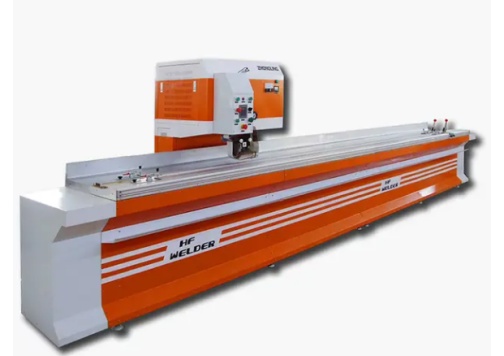
If you work with PVC tarpaulins, coated textiles, inflatable products, banners, tent fabrics, protective covers, or industrial curtains, you already know the truth: your product quality is only as strong as your seam. Customers may remember the fabric weight, the coating finish, or the printed design—but they judge durability by whether seams stay flat, watertight, and consistent from one batch to the next. That’s why a High Frequency Continuous Welding Machine (also called HF continuous welder or RF continuous welding machine) is a core tool in many fabrication lines. It enables fast, repeatable seam welding without the stitching holes that can compromise barrier performance.
At Hangzhou Kotin Tarpaulins Co., Ltd., we work with welded products daily and understand that operation is not just “turn it on and press.” To get stable welds, you need a clear routine: verify material compatibility, prepare edges, set parameters, run a short trial, and use simple inspection methods to confirm the weld is doing what it’s supposed to do. This article walks through a practical, step-by-step operating method that helps new operators learn faster and helps experienced teams reduce defects like weak seams, burn marks, wrinkling, or inconsistent bonding.
A High Frequency Continuous Welding Machine uses high-frequency electromagnetic energy to heat and fuse thermoplastic materials (commonly PVC and some coated fabrics) at the seam area. Unlike hot air welding, which heats from the outside in, high-frequency welding generates heat within the material at the weld zone—especially when the material responds well to RF energy.
“Continuous” means the machine supports continuous feeding of material through a welding area (often with rollers, guides, and pressure components), which makes it suitable for:
long straight seams (tarpaulins, curtains, covers)
consistent production runs
higher throughput with stable seam quality
Not every material welds the same way. A good operator starts with a quick compatibility and design check.
High frequency welding is typically used for thermoplastic coated materials. In many production environments, PVC-coated fabrics are common candidates.
Your seam geometry affects strength and appearance. Common options include:
overlap seam (typical for tarpaulins)
hem welding
reinforcement strip welding
If overlap is too narrow, seams can peel. If overlap is too wide, you may waste material and increase the risk of wrinkles.
Define your overlap width and stick to it—repeatability is what makes continuous welding valuable.
Before operating the machine, prepare your workstation so you can run consistently.
Item | Why You Need It | Operator Tip |
Clean cloth + non-oily cleaner | remove dust and release agents | wipe seam zone only |
Measuring tape / ruler | keep overlap consistent | mark guide lines if needed |
Edge guides / alignment stops | prevent drift during feeding | lock in once adjusted |
Sample strips | parameter trials | keep same batch material |
Basic inspection tools | confirm weld quality | do quick peel checks |
A tidy workstation reduces common problems like seam wandering, trapped dust, or inconsistent overlap.
High frequency equipment involves heat generation and high-frequency energy. Always follow your facility’s safety rules and the machine’s manual. Operationally, we recommend these universal habits:
Keep hands clear of the press/welding area during operation.
Avoid loose clothing, jewelry, or dangling gloves near rollers and moving parts.
Use proper ventilation if your process generates odor or fumes.
Keep the machine dry and the area free of water.
Ensure guards, emergency stop, and interlocks (if equipped) function before production.
If you’re training a new operator, make them learn how to stop the machine safely before teaching speed.
Turn on main power and control panel.
Allow the system to stabilize (some shops do a short idle period).
Confirm indicator lights, emergency stop, and controls respond normally.
Depending on your machine design, you may use:
welding electrodes or bars
rollers and pressure wheels
seam guides and edge limiters
Check that the welding surface is clean and not damaged. Small contamination can create weak spots.
This is where most quality problems begin—misalignment causes:
uneven overlap
exposed edges
wrinkles
inconsistent weld width
Set your guides so the overlap stays constant. Then run a short dry feed (no welding) to confirm tracking.
Even without giving “one-size-fits-all” numbers (because materials vary), operators typically tune around these variables:
Power / HF output level: determines how much energy is delivered
Pressure: ensures intimate contact and proper fusion
Welding time / dwell (if your system uses dwell): affects heating duration
Feed speed: faster speed reduces heating time per length, slower increases it
Cooling/hold (if present): supports seam set-up and reduces distortion
A helpful mindset:
If weld is weak → increase energy (power/time) or reduce speed, and confirm pressure.
If fabric burns or deforms → reduce energy or increase speed, check pressure distribution.
Before committing a full product run:
Use scrap material from the same batch.
Weld 20–50 cm.
Let it cool briefly.
Perform quick checks (peel test and visual inspection).
You don’t need a lab to verify basic seam quality.
Visual check
seam width consistent?
no burn marks or bubbles?
no wrinkles or trapped debris?
edges aligned?
Peel check
does the bond resist peeling evenly?
does failure occur by tearing the fabric/coating rather than clean adhesive separation?
(Your internal standard may define what “pass” looks like.)
In continuous welding, the first 1–3 meters tell you everything:
If tracking is stable, overlap is correct
If seam surface remains smooth
If output stays consistent when speed increases
After you confirm stability, lock settings and keep the same process conditions (especially material tension and cleanliness).
Problem | Common Cause | Practical Fix |
Weak seam / easy peel | insufficient energy, too fast, low pressure | increase power/dwell, slow feed, verify pressure |
Burn marks / deformation | too much energy or too slow | reduce power, increase speed, check electrode condition |
Wrinkles at seam | uneven feeding, poor guiding, tension mismatch | adjust guides, stabilize tension, ensure flat lay |
Bubbles / uneven surface | contamination or moisture | clean seam zone, store material properly |
Seam width inconsistent | misalignment drift | re-set guides, verify edge tracking |
A key production habit: change one variable at a time. If you adjust power, speed, and pressure simultaneously, you won’t know what actually fixed the issue.
Too much tension can stretch fabric and cause seam distortion. Too little tension can cause wrinkles. Aim for steady, repeatable handling.
Dust, release agents, and oils can reduce bonding. Wipe the seam area—especially if material has been stored or transported uncovered.
For recurring products, record:
material specification
overlap width
feed speed
power level
pressure setting
pass/fail reference samples
A simple recipe sheet reduces operator variation and helps new staff learn faster.
Some seams look “okay” immediately but fail later if they’re moved while still hot. Give seams time to set before heavy handling, folding, or stacking.
A High Frequency Continuous Welding Machine is built for speed and consistency, but it still needs disciplined operation. The best results come from controlling the fundamentals: stable overlap, clean seam zones, correct parameter balance (power, pressure, speed), and quick inspection checks that confirm your seam quality before you commit an entire batch. When you treat welding as a repeatable process—rather than a “feel-based” adjustment—you get smoother seams, fewer rejects, and a more predictable production schedule.
At Hangzhou Kotin Tarpaulins Co., Ltd., we work closely with welded tarpaulin and coated-fabric production needs, and we understand what buyers care about: consistent seam strength, clean appearance, and scalable manufacturing. If you’d like to learn more about products, materials, or fabrication solutions related to high frequency continuous welding, you’re welcome to visit and contact Hangzhou Kotin Tarpaulins Co., Ltd. for more information and practical support.
It is commonly used for thermoplastic-coated materials such as many PVC-coated fabrics used in tarpaulins, curtains, and covers.
Weak seams often come from insufficient energy, too high feed speed, low pressure, or contamination in the seam zone. Run a peel check and adjust one variable at a time.
Burn marks typically occur when energy is too high or feed speed is too slow. Reducing power or increasing speed usually helps, along with checking tooling condition.
Use stable edge guides, keep overlap width consistent, and control material tension. A short dry feed before welding helps confirm tracking.
