
English 
No. 39 Tangning Road, Yunhe Street, Linping District, Hangzhou City, Zhejiang Province
Views: 0 Author: Site Editor Publish Time: 2026-01-30 Origin: Site


Yes, a PVC Awning Welding Machine can weld thick PVC materials.
It depends on heat delivery, pressure, and travel speed.
Thick stacks need more energy inside the overlap, not only on surfaces.
We can get strong seams. We just tune it the right way.
Three controls decide most results: temperature stability, heat flow, roller pressure plus speed.
If seams peel: heat penetration stays low, or speed stays high.
If seams scorch: surface overheats, inner layers stay cool.
If seams warp: tension varies, heat stays uneven, rollers slip.
You can browse related equipment in Kotin’s product list, then compare options for your line.
| Goal | What we want | What it looks like |
|---|---|---|
| Fusion | Both PVC layers soften in the overlap zone | Seam turns glossy, stays uniform, no bubbles |
| Compression | Rollers press the melt evenly | Seam edges stay straight, no “squeeze-out” ridges |
| Repeatability | Same seam every run | Same peel feel, same width, same color tone |
Quick “thick PVC” reality chart
Thin overlap      :  ██████████  Easy heat penetration
Medium overlap    :  ████████    Needs tuning
Thick overlap     :  █████       Needs strong heat delivery
Multi-layer hem   :  ████        Needs strategy, slower speed
“Thick” means different things across shops.
For awnings, it often means multi-layer zones, not base fabric alone.
They show up at hems, pockets, corners, and reinforcement patches.
Common thick PVC categories:
PVC-coated fabric, polyester scrim inside.
PVC film, clear or colored sheets.
PVC tarpaulin grades, heavy outdoor covers.
Stacked hems, webbing zones, zipper panels.
Places thick stacks hide:
Keder edges and bead pockets.
Corner gussets and stress patches.
Strap anchors and tie-down points.
Panel joins near frame brackets.
| Area on an awning | Typical stack | Why it challenges a PVC Awning Welding Machine |
|---|---|---|
| Straight panel seam | 2 layers, simple overlap | Fast heat transfer, easy roller contact |
| Hem or pocket | 3–5 layers, folded edge | Heat must travel deeper, rollers face a “step” edge |
| Corner reinforcement | 4–7 layers, patch plus base | Thicker center, uneven pressure, risk of surface burn |
| Strip weld zones | 2 layers plus sealing strip | Extra PVC mass pulls heat away, needs steady dwell |
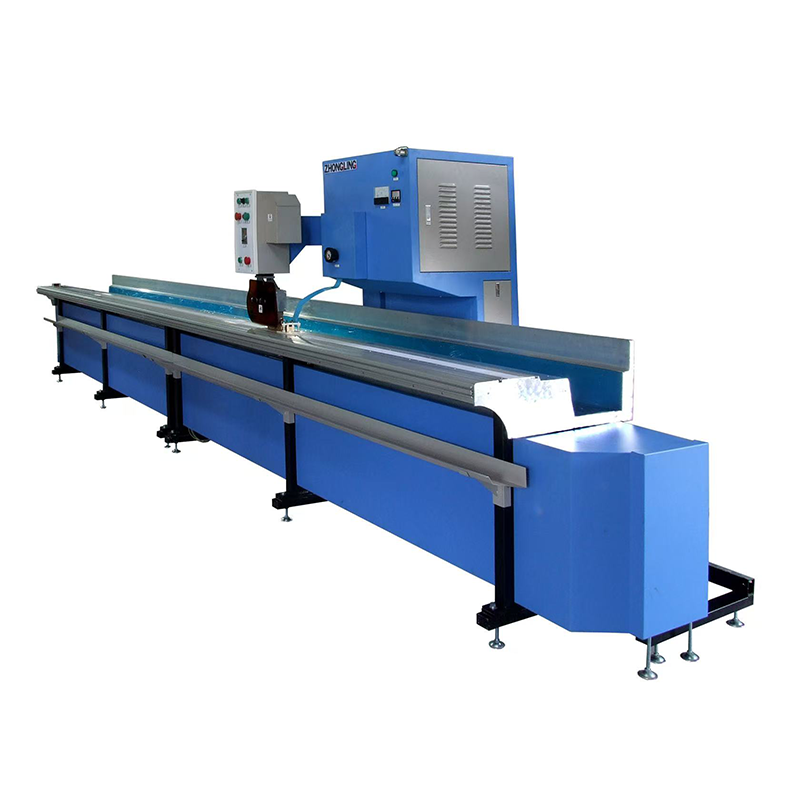
PVC welding fuses thermoplastic layers by heat plus pressure.
It creates one joined structure after cooling.
Glue relies on chemistry. Sewing relies on thread tension.
Welding relies on melt, flow, and compression.
Heat: softens PVC surfaces, starts fusion.
Time: lets heat move into the overlap.
Pressure: pushes molten PVC together for a dense seam.
Cooling: locks the seam shape and strength.
Thick stacks fail in one common way: top layer melts, inner layer stays stiff.
We see two classic “bad seam” stories.
One looks clean. It peels easily.
Another looks burned. It still peels.
Both come from poor heat penetration, plus rushed speed.
| What you see | What it usually means | First move to try |
|---|---|---|
| Seam peels like tape | Cold weld, inner layer stayed hard | Slow speed a bit, then raise heat flow |
| Brown marks, seam still weak | Surface overheated, core stayed cool | Lower temperature, longer dwell, focused nozzle |
| Wrinkles near seam | Tension uneven, rollers pull fabric skew | Stabilize feed, add guides, reduce heat spikes |
Not every PVC welding method fits thick awning work.
Some excel at long seams. Others excel at corners.
We choose based on thickness, shape, and production speed.
| Method | Best fit for thick PVC | Where it struggles |
|---|---|---|
| Hot air welding | Flexible production, varied seams, awning panels | Very thick multi-layer hems, no nozzle tuning |
| Hot wedge welding | Heavy overlaps, straight long seams, steady output | Curves, tight corners, small patch work |
| RF / HF welding | High strength seams, fast cycles, consistent joins | Tooling cost, shape limits, setup complexity |
For most awning shops, hot air sits first on the list.
It handles varied work, plus strip welding jobs.
Hot wedge fits factories chasing speed, long straight seams.
RF fits high volume lines, plus repeat part geometry.
Decision snapshot
Need curves or repairs  →  Hot air welding
Need thick straight seams → Hot wedge welding
Need max seam strength   →  RF / HF welding
A PVC Awning Welding Machine often uses hot air heat delivery.
It blows controlled hot air into the overlap zone.
Then rollers press the softened PVC layers together.
Why hot air works for thick PVC, when tuned:
Nozzle focus can push heat deeper into overlaps.
Speed control adds dwell time for multi-layer zones.
Roller pressure can flatten “step” edges at hems.
Shop tip: Tune speed first, then heat, then pressure.
Hot air setup checklist for thick PVC seams:
Start on scrap strips from the same batch.
Pick a wider overlap for thicker stacks.
Run a short seam. Do a quick peel check.
Adjust one control per test. Keep notes per recipe.
| Adjustment | What it changes | What you feel in a peel test |
|---|---|---|
| Lower speed | More dwell time, deeper heat penetration | Seam resists peel, base fabric starts tearing |
| Higher heat flow | More energy reaches inner layers | Seam feels “locked,” edges stay uniform |
| Higher roller pressure | Better melt contact, less trapped air | Seam looks flatter, peel gets harder |
Thick PVC can weld cleanly on hot air systems.
We just respect heat transfer limits. We tune for penetration.
In the next sections, we’ll cover thick-capability checks and buying tips.
“How thick” sounds like one number. In real shops, it’s a checklist.
We care about material type, stack geometry, seam width, plus production speed.
A PVC Awning Welding Machine can handle thick PVC. It just needs enough heat inside the overlap.
Some jobs need a slower pass. Some need a wedge setup. Some need a different method.
Use this rule: When the seam gets thicker, we widen the overlap, then slow the speed.
| Thickness challenge | What it really is | Best first fix |
|---|---|---|
| “My 2-layer seam fails” | Cold weld from fast travel | Slow speed, then add heat flow |
| “My hem weld fails” | Multi-layer step, uneven pressure | Wider overlap, higher pressure, better feed control |
| “My patch weld burns” | Surface overheats, core stays cool | Lower temperature, keep dwell, spread heat |
Ask these 7 questions before you promise results:
Is it PVC-coated fabric, PVC film, or rigid PVC?
Is it a simple overlap, or a folded hem stack?
Do we need a narrow seam, or a wide seam?
Do they need high speed, or can we slow down?
Will it face UV, heat cycles, cold flexing?
Does the fabric have a topcoat reducing weldability?
What test decides pass or fail in their shop?
| Material situation | Common awning example | Best method | Why it works |
|---|---|---|---|
| 2-layer overlap, flexible fabric | Panel-to-panel seam | Hot air PVC Awning Welding Machine | Fast, adjustable, easy repeat seams |
| Heavy overlap, long straight runs | Large pergola cover seams | Hot wedge welding | Heat sits inside overlap, stable penetration |
| Multi-layer hems and pockets | Keder edge, bead pocket | Hot air plus tuned pressure and speed | Better control around steps and transitions |
| High volume repeat parts | Standardized panels, same geometry | RF / HF welding | Strong fusion, consistent cycle results |
Penetration idea (simple)
Surface heat  : ██████████  melts first
Core heat     : ███         needs dwell time
Fix strategy  : slow speed → add heat flow → tune pressure
We tune thick PVC like a recipe. One material batch, one set of settings.
It keeps output stable. It prevents random seam failures later.
Temperature: how hot the system runs.
Heat delivery: airflow, nozzle focus, wedge contact.
Speed: dwell time in the overlap zone.
Pressure: roller force, contact width, compression stability.
Order matters: adjust speed first, then heat delivery, then temperature, then pressure.
Cut scrap strips from the same roll. Keep coating sides consistent.
Pick overlap width. Start wider for thick stacks.
Start conservative settings. Avoid scorching early.
Run a short seam. Stop. Let it cool.
Do a quick peel test. Feel it. Watch the failure mode.
Adjust one variable. Then repeat. Keep notes.
Lock the recipe. Label it. Train the operator.
| Peel result | What it means | What we change next |
|---|---|---|
| Peels clean, no fabric damage | Cold weld | Lower speed, raise heat delivery |
| Peels, plus glossy melt stringing | Too hot at surface | Lower temperature, keep dwell, refocus heat |
| Base fabric tears before seam opens | Strong seam | Record settings, run longer test seams |
Hems and reinforcements create “step cliffs.” Rollers dislike them.
We handle it using geometry. We stagger edges. We reduce sudden thickness jumps.
Stagger reinforcement edges. It smooths transitions.
Use a wider seam width in stepped zones.
Reduce speed only inside the thick zone, not everywhere.
Try a controlled second pass for very thick hems, if allowed.
Stagger concept
Bad stack:   [Patch edge]||||||||  sudden step
Better stack:[Patch edge]   ||||||  smoother transition
Most seam failures start before the machine turns on.
We fix it using clean surfaces, straight cuts, stable feeding.
Wipe dust and oils off overlap zones.
Remove release residue from new rolls, if present.
Test weld on scraps first, especially for glossy topcoats.
Quick check: If scrap welds stay weak, the coating might resist fusion. Switch strategy early.
Clean edges matter. Overlap drift creates thin seams, plus weak edges.
Use straight guides. Keep overlap width consistent.
Avoid wrinkles in the overlap. They trap air.
Clamp or tack strips before long runs, if needed.
Thick PVC pulls hard. It also creeps under heat.
Keep roll tension steady. Avoid stop-and-go feeding.
Use edge guides. Prevent skew across rollers.
Support large rolls. Reduce drag and operator fatigue.
You don’t need a lab to catch most problems.
We can inspect, peel-test, and water-test in minutes.
Seam looks uniform. No dark burn lines.
Edges stay flat. No lifting, no bubbles.
Seam width stays consistent along the run.
| Test | How we do it | Pass indicator |
|---|---|---|
| Peel test | Peel seam back 180°, slow pull | Material tears, seam stays fused |
| Shear pull | Clamp and pull along seam length | Seam holds under load, no sudden slip |
| Water test | Spray seam or hold water on seam line | No seepage, no edge lift |
| Defect | What it signals | Fix |
|---|---|---|
| Cold weld | Not enough dwell or penetration | Slow speed, improve heat delivery |
| Burn marks | Surface overheating | Lower temperature, keep dwell, spread heat |
| Bubbles | Moisture, contamination, overheating | Clean, dry, reduce heat spikes |
| Edge lift | Pressure low or overlap inconsistent | Increase pressure, fix overlap control |
When seams fail, we chase the failure mode. It tells the truth.
Slow the speed first. Give it dwell time.
Check nozzle distance and focus. Aim heat into overlap.
Raise pressure slightly. Avoid crushing melt out.
Clean overlap zones. Oils ruin fusion fast.
Lower temperature. Keep speed slower for penetration.
Refocus heat delivery. Push energy into the overlap.
Reduce tension. Warping often follows tension imbalance.
Stabilize feed. Use guides. Reduce skew.
Lower heat spikes. Use steady settings, not extremes.
Support the roll. Drag pulls material off line.
Corners reduce roller contact. They also change heat exposure.
Use a handheld tool for tight geometry, if available.
Use patch welding steps. Keep overlap wider at corners.
Reduce speed through curves. Keep compression consistent.
Specs can look similar. Real performance lives in stability and control.
We focus on what changes seam strength on thick stacks.
Stable temperature control: it prevents hot and cold swings.
Strong heat delivery: airflow power, nozzle choices.
Pressure system quality: rollers hold force evenly.
Speed range: slow enough for thick hems, fast enough for panels.
Repeatable recipes: settings save time across jobs.
Service plan: spare parts and calibration support.
| Option | Why you pick it | Who it fits |
|---|---|---|
| Hot air PVC Awning Welding Machine | Flexible seams, varied work, simple operation | Most awning and pergola shops |
| Hot wedge welding | Heavy overlaps, long straight seams, stable penetration | High output lines, big continuous panels |
| RF / HF welding | Fast cycles, strong seams, consistent geometry | Factories producing repeat parts at scale |
What thick PVC samples did you test on PVC-coated fabric?
Which nozzles come included for thick stacks?
Can you share peel-test results on multi-layer hems?
What seam width stays stable at production speed?
What spare parts ship fast, plus what maintenance it needs?
Practical ask: Send your own scrap roll piece. Ask them to weld it. It beats guessing.
Heat welding looks simple. It still needs safety habits.
Ventilate the work area. Warm PVC can release odors.
Keep hands away from hot nozzles and rollers.
Manage big rolls using stands. Avoid sudden drops.
Check power cables and air paths. Heat systems hate blockages.
Clean nozzles and air paths weekly. Keep airflow stable.
Inspect rollers for wear. Replace if they glaze or crack.
Calibrate temperature and speed monthly, if production runs daily.
Store spare nozzles and belts. They save downtime.
A PVC Awning Welding Machine can weld thick PVC materials. It isn’t magic. It’s penetration plus pressure plus repeatable speed.
If thick seams fail, we slow down first. We improve heat delivery next. We tune pressure last.
If you want machine recommendations for thick PVC awning work, visit www.kotinglobal.com.


